
How to Write Compelling Blog Post Headlines That Drive Traffic
In this Article, we have provided a detailed guide on How to Write Compelling Blog Post Headlines.
The headline is your content’s first impression, and often its last chance to capture attention. In today’s overcrowded digital landscape, even the most valuable content can go unnoticed without a compelling headline. Research shows that 8 out of 10 people read headlines, but only 2 out of 10 click through to read the actual content. This makes your headline not just important, but absolutely critical to your content’s success.
Related: How to Use AI to Generate Video Ideas
The Psychology Behind Click-Worthy Headlines
Understanding what makes people click is the foundation of effective headline writing. According to psychological research, compelling headlines tap into fundamental human motivators:
Curiosity Gap Creation
The most effective headlines create a “curiosity gap”—the space between what readers know and what they want to know. When you hint at valuable information without revealing everything, you trigger an irresistible urge to learn more.
Example: “The One Mistake 90% of Bloggers Make (And How to Avoid It)”
Emotional Triggers
Headlines that evoke emotions consistently outperform neutral ones. The key emotions that drive clicks include:
- Curiosity: “What’s the hidden secret?”
- Urgency: “Limited time opportunity”
- Fear: “Avoid this costly mistake”
- Excitement: “Revolutionary breakthrough”
Social Currency
People share content that makes them look knowledgeable, helpful, or trendy. Headlines that promise insider knowledge or trending insights tap into this desire for social currency Writing Cooperative.
The Four Pillars of Successful Headlines
1. Share Clear Value
Your headline should immediately communicate what readers will gain. Avoid ambiguity and clearly state the benefit or outcome readers can expect.
Instead of: “Thoughts on Social Media Marketing” Try: “5 Social Media Strategies That Increased Our Engagement by 300%”
2. Include Numbers and Specificity
Headlines with numbers get 36% more clicks than those without. Numbers provide structure and set clear expectations for readers. Odd numbers (3, 7, 11) tend to perform better than even numbers by CoSchedule.
Powerful number formats:
- “7 Ways to…”
- “The 15-Minute Guide to…”
- “Why 73% of Marketers…”
3. Promise Depth and Quality
Your headline should suggest comprehensive, actionable content. Words like “complete,” “ultimate,” “step-by-step,” and “comprehensive” signal depth and quality.
4. Optimize for Search Intent
Include your target keyword naturally in the headline, preferably toward the beginning. This helps both search engines and readers immediately understand your content’s focus.
Pro Tip: Want to Generate Compelling Blog headlines at scale, Try out our Blog Headline Generation Tool
High-Converting Headline Formulas
Based on analysis of millions of headlines, here are proven formulas that consistently drive engagement:
The “How-To” Formula
Pattern: “How to [Achieve Desired Outcome] [Without Common Obstacle]” Example: “How to Build a Following Without Spending Money on Ads”
The List Formula
Pattern: “[Number] [Adjective] Ways to [Achieve Desired Outcome]” Example: “11 Proven Ways to Double Your Email Open Rates”
The Question Formula
Pattern: “Are You [Making This Mistake/Missing This Opportunity]?” Example: “Are You Making These 5 SEO Mistakes That Kill Your Rankings?”
The Secret Formula
Pattern: “[Number] Secrets [Authority Figures] Don’t Want You to Know” Example: “7 Secrets Top Marketers Don’t Want You to Know About Conversion Optimization”
The Mistake Formula
Pattern: “[Number] Mistakes [Target Audience] Make When [Common Action]” Example: “10 Mistakes Entrepreneurs Make When Launching Their First Product”
The Comparison Formula
Pattern: “[Option A] vs [Option B]: Which Is Better for [Specific Goal]?” Example: “Email Marketing vs Social Media: Which Drives More Sales in 2024?”
Power Words That Increase Click-Through Rates
Certain words have been proven to increase engagement and clicks. Based on analysis of over one million headlines, here are the most effective categories:
Urgency Words
- Now, Today, Fast, Quick, Instant, Immediately
Value Words
- Free, Proven, Guaranteed, Essential, Ultimate, Complete
Emotional Words
- Amazing, Incredible, Shocking, Surprising, Exclusive, Secret
Authority Words
- Expert, Professional, Insider, Advanced, Exclusive, Premium
Common Headline Mistakes to Avoid
1. Clickbait Without Substance
While curiosity-driven headlines work, they must deliver on their promise. Headlines that overpromise and underdeliver damage your credibility and increase bounce rates.
2. Being Too Vague
Headlines like “Great Marketing Tips” tell readers nothing about what they’ll actually learn. Be specific about the value you’re providing.
3. Ignoring Your Audience’s Language
Use the words and phrases your target audience uses. Survey your readers to discover their preferred terminology and pain points.
4. Forgetting Mobile Users
With mobile traffic dominating, ensure your headlines display well on smaller screens. Keep critical information within the first 50-60 characters.
5. Neglecting Search Intent
Your headline should match what people are actually searching for. Research popular keywords in your niche and incorporate them naturally.
Testing and Optimization Strategies
A/B Testing Headlines
Create multiple headline variations for important content and test them across different platforms:
- Email subject lines
- Social media posts
- Paid advertising campaigns
Track metrics like:
- Click-through rates
- Time on page
- Social shares
- Conversion rates
Industry-Specific Headline Strategies
B2B Content
Focus on professional outcomes, ROI, and efficiency gains:
- “How to Reduce Project Costs by 40% Using This Simple Framework”
- “The Executive’s Guide to Digital Transformation in 2024”
Lifestyle and Personal Development
Emphasize personal transformation and emotional benefits:
- “Why I Quit My 6-Figure Job to Travel the World (And How You Can Too)”
- “The Morning Routine That Changed My Life in 30 Days”
Technology and Software
Highlight innovation, comparisons, and practical applications:
- “Python vs JavaScript: Which Language Should You Learn First?”
- “10 AI Tools That Will Replace Manual Tasks in Your Business”
Measuring Headline Success
Track these key metrics to evaluate your headline performance:
Primary Metrics
- Click-through rate (CTR): The percentage of people who click after seeing your headline
- Time on page: How long visitors stay after clicking
- Bounce rate: The percentage who leave immediately
Secondary Metrics
- Social shares: How often your content gets shared
- Comments and engagement: Reader interaction levels
- Conversion rate: How many readers take desired actions
The Headlines That Built Brands
Learning from successful examples can inspire your own headline creation:
Viral Success Stories
- BuzzFeed: “21 Pictures That Will Restore Your Faith in Humanity”
- Upworthy: “This 3-Minute Video Will Make You Rethink Your Entire Life”
- Neil Patel: “How I Increased My Search Traffic by 110,073 Visitors with This Strategy”
These headlines work because they combine emotional triggers with specific promises and social proof.
Advanced Headline Techniques
The Pattern Interrupt
Break expected patterns to grab attention: Instead of: “10 Marketing Tips for Small Business” Try: “Why Following These 10 Marketing Tips Will Destroy Your Small Business”
The Reverse Psychology
Use contrarian approaches to stand out: Example: “Why You Should Never Write Another Blog Post (Until You Read This)”
The Story Hook
Hint at a compelling narrative: Example: “The $50 Mistake That Cost Me $50,000 (And How You Can Avoid It)”
Building Your Headline Writing Process
Step 1: Write 25 Headlines
For every piece of content, write at least 25 different headline options. This forces you to explore various angles and approaches.
Step 2: Apply the Formula Test
Check each headline against proven formulas. Does it include numbers? Create curiosity? Promise clear value?
Step 3: Optimize for Context
Consider where your headline will appear:
- Search results (focus on keywords and clarity)
- Social media (emphasize emotional hooks)
- Email newsletters (create urgency and personalization)
Step 4: Test and Iterate
Use A/B testing to compare headline performance and refine your approach based on data.
Related: AI Welcome Email Generator: Create Engaging Emails Fast
How to Use WordWriter to Generate Compelling Blog Headlines: A Step-by-Step Guide
Step 1: Access WordWriter Platform

Navigate to the WordWriter website and create your account. If you’re already a user, simply log in to access your dashboard.
Step 2: Navigate to the AI Dashboard
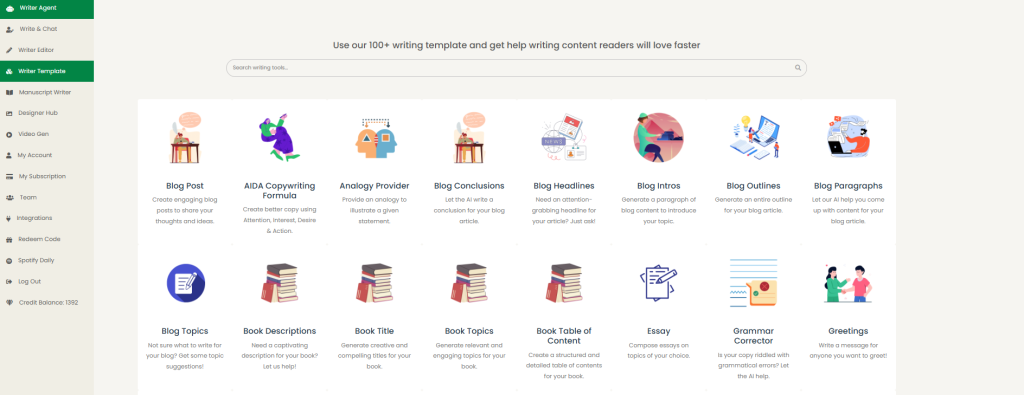
Once logged in, You should be able to access the AI Dashboard. This is your central hub for all AI writing tools and templates.
Step 3: Find Writer Templates
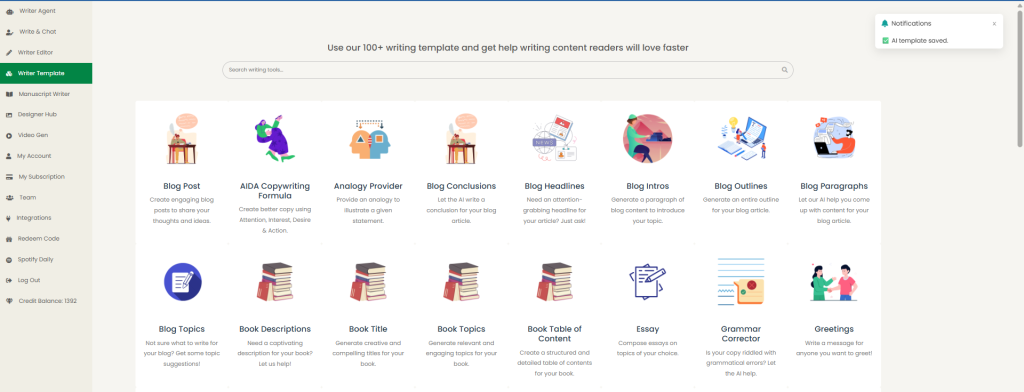
In the AI Dashboard, look for the “Writer Templates” section on the top left corner. This contains pre-built templates for various content types, including blog headlines.
Step 4: Search for Blog Post Headlines Template
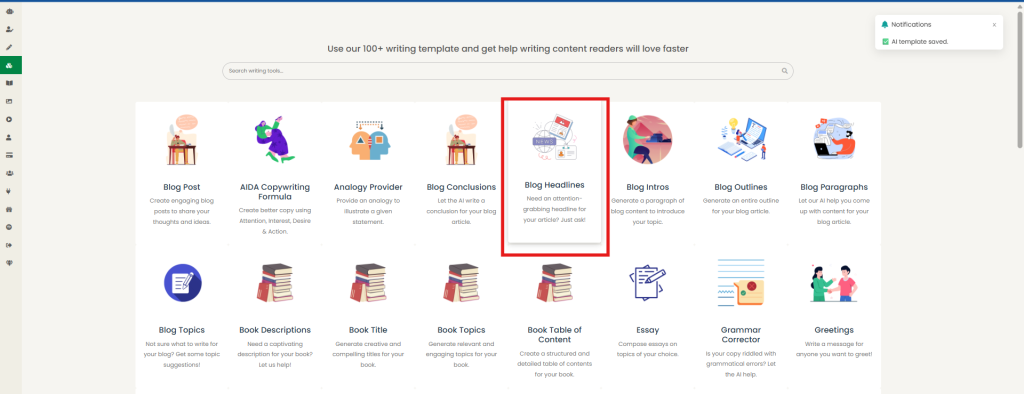
Use the search function within Writer Templates to find “Blog Post Headlines” or simply browse through the available templates until you locate the headline generator.
Creating Your Blog Headlines
Step 5: Select the Blog Headlines Template
Click on the “Blog Post Headlines” template to open the headline generation interface. You’ll see input fields and customization options.
Step 6: Provide Context and Topic Information
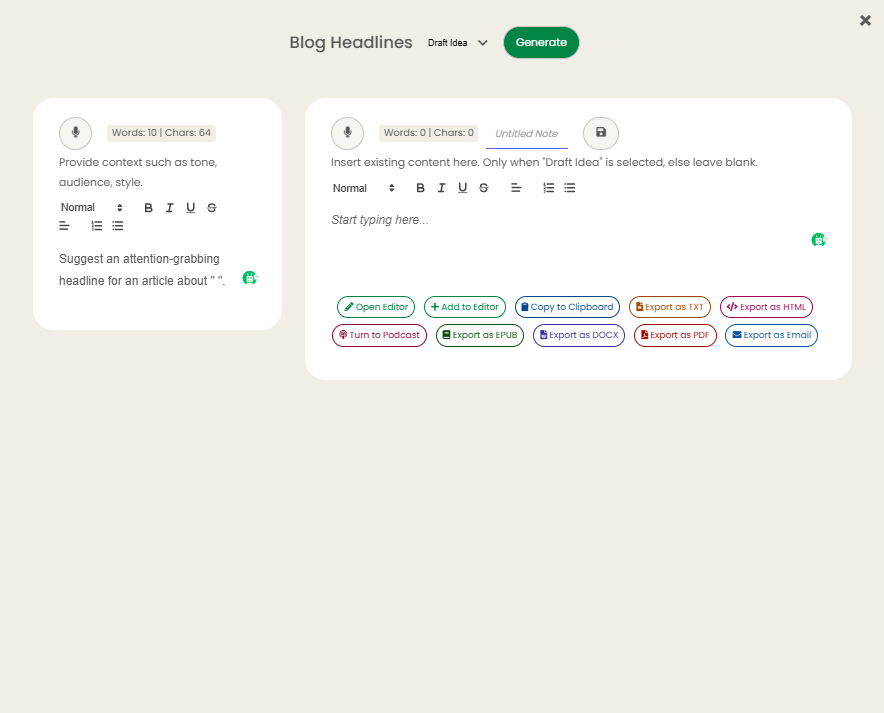
In the context field, enter:
- Your blog post topic
- Target audience (e.g., “small business owners,” “fitness enthusiasts”)
- Tone preference (professional, casual, urgent, etc.)
- Any specific keywords you want to include
Step 7: Set Your Parameters
Configure the generation settings:
- Number of headlines desired (typically 5-15 options)
- Headline style (how-to, listicle, question-based, etc.)
- Length preferences (short and punchy vs. longer descriptive)
Step 8: Generate Your Headlines
Click the “Generate” button to let WordWriter’s AI create multiple headline options based on your inputs.
Optimizing Your Results
Step 9: Review and Refine
Examine the generated headlines and:
- Check for relevance to your topic
- Ensure they match your brand voice
- Verify they include important keywords
- Assess their click-worthiness
Step 10: Use the Refinement Features
If needed, use WordWriter’s refinement options:
- Regenerate with adjusted parameters
- Edit individual headlines manually
- Request variations of promising headlines
Step 11: Test Multiple Options
Generate several batches with different parameters to give yourself plenty of options. Consider creating headlines for different angles of the same topic.
The Future of Headlines
As content consumption evolves, headline writing must adapt:
Voice Search Optimization
With growing voice search usage, headlines should answer conversational queries:
- “What’s the best way to…”
- “How do I…”
- “Why does…”
AI and Personalization
Emerging technologies enable personalized headlines based on user behavior, demographics, and preferences.
Platform-Specific Optimization
Each platform has unique characteristics that affect headline performance:
- LinkedIn: Professional, outcome-focused headlines
- Twitter: Conversational, trending topic integration
- Instagram: Visual storytelling, emoji integration
Conclusion: Your Next Steps
Writing compelling headlines is both an art and a science. It requires understanding your audience’s psychology, applying proven formulas, and continuously testing and refining your approach.
Start by implementing these strategies:
- Analyze your best-performing content to identify successful headline patterns
- Create a swipe file of effective headlines in your industry
- Use proven formulas as starting points for your own headlines
- Test different approaches and measure results
- Stay updated on trending topics and language in your niche
Remember, your headline is your content’s first—and often only—chance to make an impression. Invest the time to make it count, and you’ll see dramatic improvements in your content’s reach, engagement, and impact.
The most successful content creators don’t just write headlines; they craft compelling promises that their content delivers on. Master this balance, and you’ll transform your content from overlooked to irresistible.
