
How to Generate Blog Topics with AI
Writer’s block is a peculiar threat to content creators and marketers, especially when it comes to generating ideas for blog topics.
Recent studies reveal that a staggering 60% of bloggers struggle with generating fresh ideas consistently, while nearly half of content creators report difficulties in engaging their audiences with compelling topics Medium.
AI-powered tools are offering new perspectives, unexpected combinations, and data-driven insights that can spark creativity and systematically overcome the dreaded writer’s block.
In this article, we will provide a step-by-step guide on how to generate blog topics with AI, and you will learn how to:
- Measure and optimize your AI-driven topic generation for better results over time
- Choose the right AI tools for your specific content needs and budget
- Craft effective prompts that generate high-quality, relevant topic ideas
- Analyze your audience and competitors using AI-powered research techniques
- Identify trending topics and content gaps before your competition catches on
- Organize and prioritize your AI-generated ideas into a strategic content calendar
- Refine and customize generic AI suggestions to match your brand voice and expertise
- Scale your content ideation process without sacrificing quality or creativity
What Are Blog Topic Ideas?
Blog topic ideas serve as the strategic backbone of any successful content marketing initiative—they are the conceptual blueprints that transform abstract marketing goals into tangible, audience-focused content pieces. At its core, a blog topic idea represents a specific subject, angle, or perspective that addresses your audience’s needs, interests, pain points, or curiosities while simultaneously advancing your brand’s objectives.
Think of blog topic ideas as the bridge between your business expertise and your audience’s quest for valuable information. They encompass everything from educational how-to guides and industry insights to trending discussions and problem-solving resources.
More than just random subjects to write about, well-crafted blog topic ideas are strategically chosen concepts that serve multiple purposes: they attract your ideal readers, establish your authority in your field, and guide potential customers through their journey from awareness to action.
The Strategic Foundation of Content Marketing
Blog topics function as the foundation of your content strategy because they directly influence every other aspect of your marketing efforts. When you consistently publish content around carefully selected topics, you create a comprehensive resource library that positions your brand as a trusted authority.
This systematic approach to topic selection ensures that every piece of content you create serves a specific purpose in your broader marketing ecosystem.
Consider how blog topics work in practice: a software company might develop topics around “productivity hacks,” “remote work solutions,” and “digital transformation strategies.”
Each topic cluster not only provides value to their target audience but also naturally leads readers toward considering their products as solutions. This strategic alignment between topics and business goals is what transforms casual blog readers into engaged prospects.
Why are Blog Topics Important
Here are the key reasons why blog topics are crucial for content success:
Strategic Foundation
Blog topics serve as the blueprint for your entire content strategy. They determine whether your content aligns with your business goals, supports your marketing funnel, and moves your audience toward desired actions like subscribing, purchasing, or sharing.
Audience Connection
The right topics directly address your audience’s pain points, interests, and questions. When you choose topics that resonate, you build trust and establish yourself as a valuable resource, turning casual readers into loyal followers and potential customers.
Search Engine Visibility
Well-chosen blog topics form the backbone of your SEO strategy. Topics that align with what people are actively searching for help your content rank higher in search results, driving organic traffic to your website without paid advertising.
Content Quality and Focus
Having a clear topic prevents you from writing rambling, unfocused posts. It gives your writing direction, helps you stay on message, and ensures readers get the specific value they’re looking for when they click on your headline.
Competitive Advantage
Smart topic selection allows you to identify content gaps in your industry, address underserved audience needs, or approach popular subjects from unique angles that differentiate you from competitors.
Resource Efficiency
When you plan topics strategically, you avoid wasting time on content that doesn’t serve your goals or audience. This means better ROI on your content creation efforts and more efficient use of your marketing budget.
Brand Authority Building
Consistently covering topics within your expertise area establishes you as a thought leader. Over time, this builds credibility and positions your brand as the go-to source for information in your niche.
Content Calendar Structure
Topics provide the framework for long-term content planning, helping you maintain consistency, avoid repetition, and ensure you’re covering all important areas of your subject matter systematically.
Without well-chosen topics, even the best writing becomes directionless content that fails to achieve meaningful business results.
How to Generate Blog Topics Using AI
1. Define What Goal You’re Trying to Achieve
Understanding what goal your business is trying to achieve is fundamental to your overall content strategy and directly influences the kind of content you should create. Before asking AI to generate topics, you need clarity on your content’s purpose and desired outcomes.
This strategic foundation ensures that AI-generated topics align with your business objectives rather than just producing random ideas that look good but don’t drive results.
Your blog topics should align with one of four primary content intents. Educational content focuses on building authority, trust, and brand awareness by answering questions, providing how-to guides, and explaining concepts.
Commercial content supports the buying journey and decision-making process through product demonstrations, case studies, and ROI discussions.
Before prompting any AI tool, clarify what business objective your content supports, whether that’s lead generation, brand awareness, or customer retention. Consider where your audience typically discovers your content, what action you want readers to take after consuming it, and how this content fits into your broader marketing funnel.
Once you’ve identified your primary goal, you can craft more effective AI prompts by focusing on common questions and learning paths for educational content, emphasizing problem-solving and product benefits for transactional content, targeting buying journey stages for commercial content, or highlighting your unique story and expertise for navigational content.
2. Conduct Keyword Research
Once you’ve defined your business goals, the next step is conducting strategic keyword research that aligns with those objectives. This research forms the foundation for AI-powered topic generation, providing the data and search terms that will guide AI tools toward creating relevant, discoverable content ideas.
Wordwriter keyword generator tool helps you achieve this by providing you with keywords and data that aligns with your business
3. Use Wordwriter Blog Topic Generator
The Wordwriter blog topic generator is a powerful AI tool that transforms your keyword research into actionable blog topic ideas. This tool leverages artificial intelligence to create multiple topic variations that align with your researched keywords and business goals.
How to Use Wordwriter Blog Topic Generator:
Step 1: Access the Tool

- Sign up for Wordwriter or log into your existing account
- Navigate to the “Writer Templates” section
- Search for and select the “Blog Topic Generator” template
Step 2: Provide Context
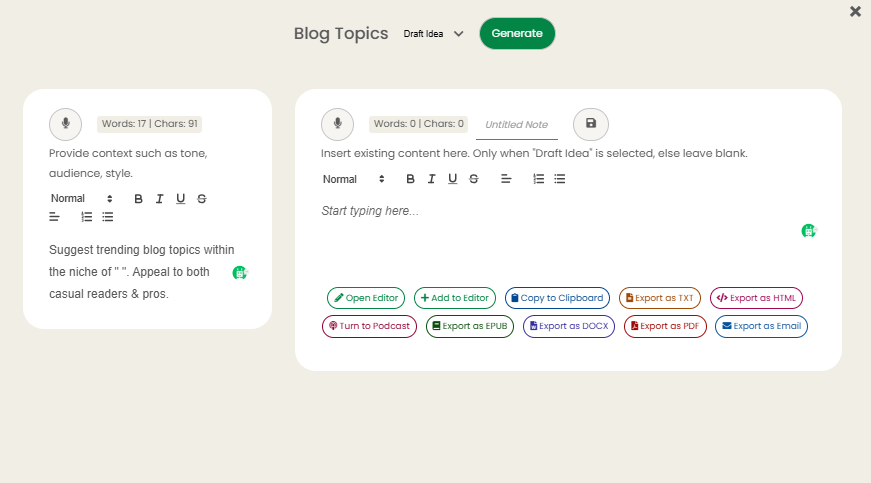
- Input your primary keywords from your research
- Specify your target audience (e.g., “small business owners,” “marketing professionals”)
- Define your content goal (educational, transactional, commercial, or navigational)
- Add any industry-specific context or requirements
Step 3: Generate Topics
- Click the generate button to create multiple topic suggestions
- Review the AI-generated topics for relevance and alignment with your goals
- Generate additional batches if you need more options
Benefits of Wordwriter’s AI Topic Generator:
- Produces dozens of topic ideas in seconds
- Ensures topics align with your keyword research
- Provides varied angles and approaches for the same keywords
- Saves hours of manual brainstorming time
- Generates topics based on current search trends and data
Example Output: If you input the keyword “email marketing,” the tool might generate:
- “10 Email Marketing Mistakes That Kill Your Open Rates”
- “How to Build an Email List from Scratch in 2024”
- “Email Marketing vs. Social Media: Which Drives Better ROI?”
- “The Complete Guide to Email Automation for Beginners”
This systematic approach ensures your AI-generated topics are both creative and strategically sound.
Refine Your Ideas
Now that you have a collection of AI-generated topical ideas, the next crucial step is to fine-tune these suggestions to perfectly match both SEO requirements and your audience’s specific needs. While AI excels at producing relevant topics quickly, human insight is essential to transform generic suggestions into compelling, targeted content that truly resonates with your readers and performs well in search engines.
Start Writing Your First Draft
Once you’ve refined your AI-generated topics to align with your brand and audience needs, it’s time to transform those ideas into compelling blog content. This is where the actual writing begins, and fortunately, AI can continue to support you throughout the drafting process to ensure your content captivates readers from the very first sentence.
The opening of your blog post is arguably the most critical component, as it determines whether visitors will continue reading or bounce back to search results within seconds. Our blog intro template is specifically designed to help you craft powerful introductions and hooks that keep your audience glued to their screens.
Simply input your refined topic and key points, and the template will provide multiple introduction options that range from storytelling approaches to statistical hooks, problem-agitation techniques, or question-based openings that directly address your audience’s concerns.
As you develop the body of your blog post, our blog paragraph tool proves invaluable for expanding your initial ideas into well-developed, informative sections. When you have a core point that needs elaboration, input your main idea into the paragraph tool, and it will help you expand that thought into a full, coherent paragraph complete with supporting details and examples. This ensures each section of your blog post provides substantial value while maintaining the flow and readability that keeps readers engaged throughout your content.
Conclusion
Generating blog topics using AI transforms content creation from a daunting creative challenge into a systematic, efficient process. By defining clear goals, leveraging powerful tools like WordWriter’s blog topic generator, refining AI suggestions with human insight, and utilizing AI writing assistants for drafting, you can maintain a consistent flow of high-quality, audience-focused content.
