
What is Batch Content Writing? Mistakes to Avoid

Batch content writing is the practice of grouping similar content tasks together and working through them in focused sessions, rather than starting and finishing one piece at a time. Think of it like meal prepping, but for your content calendar. Instead of cooking every day, you dedicate a few hours on Sunday and have meals ready for the whole week.
This guide walks you through how to actually do it — step by step.
What Makes Batch Content Writing Different
Most people write content reactively. A deadline shows up, they open a doc, research, draft, edit, and publish. The process starts from scratch every single time.
Batch content writing flips that. You separate content work into distinct phases — ideation, research, outlining, writing, editing, and you do each phase for multiple pieces at once. So instead of researching one article, writing it, then starting over for the next, you research five articles in one sitting, then outline all five, then write them all.
The result is faster output with less cognitive friction. Every time you switch between tasks, your brain spends energy re-orienting. Batching removes most of those switches.
Related: Social Media Content Repurposing Tools for 2026
How to do Batch Content Writing
Step 1: Build a Content Inventory Before You Write Anything
Batch content writing starts before you touch a keyboard. You need a backlog of topics to pull from, otherwise you’ll stall at the planning stage every time.
Spend one focused session doing nothing but keyword research and topic generation. Aim for 20 to 30 ideas minimum. Group them by theme, funnel stage, or content type. This becomes your queue.
Tools like WordWriter’s Repurposer can help you stretch existing content into new angles and formats, giving you more ideas from material you already have. A two-year-old blog post can become a refreshed guide, a listicle, or a social series with the right prompts.
Once your topic bank is full, you stop asking “what should I write today?” and start asking “what am I writing next?” That shift alone removes a surprising amount of creative drag.
Step 2: Write Briefs for Multiple Pieces at Once
A content brief answers every question before the writing begins. It includes the target keyword, the angle, the H2 structure, who the audience is, and what the reader should be able to do or understand after reading.
When you batch your briefs, writing five or ten of them in one sitting, a few things happen. Your thinking becomes more consistent across pieces. You spot topic gaps and overlaps early. And when it’s time to write, you never sit staring at a blank doc wondering where to start.
Keep your briefs in a simple template. Same format every time. The goal is speed and clarity, not perfection. A brief doesn’t need to be long — even six to eight bullet points per piece is enough to guide a strong draft.
Step 3: Set Dedicated Writing Blocks
The actual writing is where most people abandon the batch approach and drift back to one-at-a-time habits. To prevent this, you need time blocking.
A writing block is a scheduled, distraction-free window where you write and nothing else. No email, no Slack, no editing what you just wrote. Just drafts.
For batch content writing to work, your writing blocks need to be long enough to build momentum — at least 90 minutes at a stretch. During that time, the goal is volume. You’re not editing. You’re not perfecting your intro. You’re moving from brief to draft, piece after piece.
Many content creators find it helpful to write first drafts at a lower standard intentionally. Get the ideas down, cover the structure, hit the key points. Polish comes later. Treating drafting and editing as completely separate stages is one of the most effective habits in batch content writing.
Step 4: Edit in a Separate Session
Once your drafts are done, let them sit. Even a few hours of distance changes how you read your own work.
Then batch your editing. Go through each draft in sequence, looking for the same things: clarity, flow, keyword placement, internal links, and CTAs. Because you’ve just been writing about related topics, your brain is primed. You’ll catch inconsistencies faster and your edits will be more coherent across pieces.
This is also the stage where you check your SEO basics. Make sure the primary keyword — in this case, batch content writing appears naturally in the title, the first 100 words, at least one H2, and the meta description. Don’t force it. If it sounds unnatural, rewrite the sentence until it flows.
Step 5: Use AI to Compress the Timeline
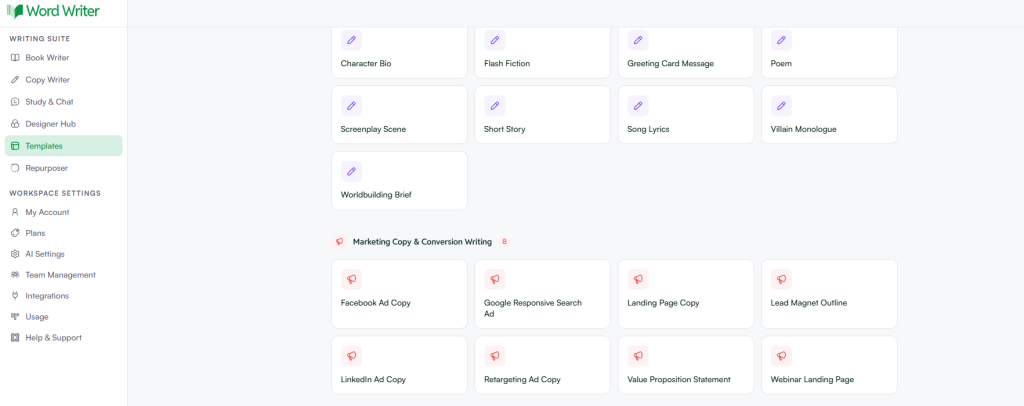
Batch content writing becomes significantly faster when AI handles the heavy lifting on first drafts, outlines, and reformatting.
Tools like WordWriter are built for exactly this. You can generate draft outlines for multiple topics in minutes, repurpose existing content into new formats, or use AI to fill in sections while you focus on the parts that need your voice and expertise.
The key is knowing where AI saves you time without costing you quality. Use it to draft, structure, and expand. Use your own judgment to fact-check, add specificity, and make the content sound like it was written by a person who actually knows the subject.
That combination — AI for speed, human for accuracy and tone — is what makes batch content writing scalable without making it feel mass-produced.
Step 6: Publish and Schedule in One Go
The final batch task is publishing. Instead of uploading and scheduling posts one at a time throughout the week, set aside one session to handle all of it. Write your meta descriptions, add internal links, format your headers, upload images, and schedule publish dates in a single sitting.
This sounds small, but the time savings add up. More importantly, batching your publishing means you’re always working ahead. You’re not publishing content the day you write it, you’re building a buffer. That buffer is what turns a reactive content strategy into a proactive one.
Related: The 8 Best Social Media Tools 2026
A Simple Weekly Batch Content Writing Schedule
If you’re new to this, here’s a starting rhythm that works for most individual creators and small teams:
- Monday: Keyword research and topic selection for the week or month ahead.
- Tuesday: Write briefs for all selected topics.
- Wednesday to Thursday: Writing blocks only. No editing, no research.
- Friday: Edit all drafts, add SEO elements, and schedule for publishing.
You don’t have to follow this exact structure. The point is to separate each type of task into its own dedicated time, rather than blending them all into one messy, start-stop process.
Common Mistakes to Avoid
- Trying to do everything in one session. Researching, writing, and editing in the same sitting is exhausting and rarely produces good work. Split the stages.
- Skipping the brief. Writing without a brief is how you end up with a draft that rambles, goes off-topic, or misses the keyword intent entirely.
- Perfectionism in the drafting stage. A good batch writing session produces rough drafts, not finished articles. Save the polish for editing.
- Not building a topic bank. If you start each batch session without a queue to pull from, you’ll spend your best energy on planning instead of writing.
Final Thoughts
Batch content writing isn’t about producing more content for the sake of it. It’s about building a smarter system so the content you do produce is consistent, purposeful, and less stressful to create.
If you’re constantly behind on your content calendar, or if writing feels harder than it should, the issue usually isn’t motivation, it’s workflow. Batch content writing gives you the structure to fix that.
Start small. Pick five topics, write the briefs, and block out two mornings for drafting. See how much you can produce in a week when the planning is already done.
Then use WordWriter to speed up what you can automate, so your time goes toward the work only you can do.
