
7 Best AI Writing Tools for Fiction in 2026
Fiction writing is one of the hardest things to do well, and one of the easiest things for AI to do badly. Generic AI tools treat a novel chapter like a long blog post: they fill space, generate paragraphs, and produce prose that technically reads but has no pulse. The tools that actually help fiction writers understand something different — that great fiction lives in the specifics. In a character’s voice. In the pacing of a scene. In the way a magic system stays internally consistent 200 pages after you introduced it.
This list covers 7 AI writing tools built for fiction in 2026, tools evaluated on how well they handle narrative craft, long-form consistency, voice preservation, genre awareness, and the specific problems fiction writers actually face.
What Makes a Tool Good for Fiction
Before getting into the list, here’s what we evaluated: context awareness across long manuscripts, style preservation so AI suggestions don’t flatten your voice, genre-specific output quality, world-building and character consistency features, and how well the tool integrates into a real writing workflow without getting in the way.
7 Best AI Writing Tools for Fiction in 2026
1. WordWriter — Best All-Around AI Writing Tool for Fiction in 2026
Leading the pack in 2026, WordWriter has established itself as the premier AI writing tool for fiction writers who need more than just a text generator. It’s the only tool on this list that covers the full spectrum of what serious fiction writers need: deep research for historically grounded stories, long-form manuscript generation with maintained consistency, genre-specific writing tools, character and world-building systems, style matching, and visual storytelling support, all inside one platform.
Key Features
- Story Bible — Build a living reference for your characters, world, and lore so your story stays consistent from chapter one to the last page. For series writers and authors managing complex fictional universes, this is one of the most important features a fiction tool can offer. Every character trait, plot thread, and world rule lives in one place, and the AI draws on it throughout generation.
- Plot Development Tools — Map out your story arc, identify pacing issues early, and structure your narrative with tools built around how great fiction actually works — beats, tension curves, scene-level structure, and chapter-to-chapter flow. Not just an outline generator, but a genuine story architecture tool.
- Creative Brainstorming — When the story stalls, WordWriter generates AI-powered plot twists, character directions, and “what if” scenarios tailored specifically to your story and its established world. These are contextual suggestions, not generic prompts.
- Style Matching — WordWriter reads your existing prose and mirrors your voice in all AI-generated content. Every suggestion, continuation, and expansion sounds like you wrote it, not a machine. For fiction writers, this is the difference between a tool you can actually use and one that fights your voice at every turn.
- Visual Storytelling — Bring your characters, settings, and scenes to life visually before writing them into existence. This gives fiction writers a concrete reference point that makes descriptive prose sharper, more specific, and more consistent across chapters.
- Genre Specialization — Whether you write fantasy, sci-fi, literary fiction, romance, thriller, horror, or anything in between, WordWriter is tuned to the specific conventions and demands of your genre. It understands that a thriller chapter has different pacing rules than a literary fiction chapter.
- Long-Form Excellence — Generate complete book manuscripts up to 200+ pages with maintained consistency in tone, voice, character, and narrative arc. This is the core capability that separates serious fiction tools from basic AI assistants.
- AI Research Agent — Particularly valuable for historical fiction, science-based sci-fi, and any fiction that requires factual accuracy. The AI Research Agent gathers, analyzes, and cites credible sources within your workflow, so your world-building details and historical facts are grounded in real information.
- Content Repurposing — Transform recorded brainstorming sessions, interviews, podcast conversations, and video content into written story material, useful for writers who develop their narratives through talking before writing.
- Multilingual Support — Generate and refine fiction in multiple languages with cultural adaptation, useful for authors writing for international audiences or exploring non-English narrative traditions.
- 100+ Templates — Covers every fiction format: novel chapters, short stories, screenplays, character sketches, scene outlines, query letters, book synopses, and more.
- Multimedia Integration — Create character art, setting illustrations, scene diagrams, and world maps within your workflow without switching tools, keeping all your creative assets connected to the manuscript they serve.
Ratings: 4.9/5
Pricing: Free trial available, no credit card required. Visit wordwriter.co for current plan details.
Best For: Novelists, fantasy and sci-fi authors, historical fiction writers, creative writers across all genres, screenwriters, and any fiction writer who wants a comprehensive platform that supports the full manuscript journey.
2. Sudowrite — Best AI Creative Co-Pilot for Fiction Prose

Sudowrite was built by fiction writers, for fiction writers, and it shows in everything from the feature names to the quality of the output. Its proprietary Muse model was trained specifically for narrative prose — unlike general-purpose AI tools, Sudowrite’s AI understands story structure, character arcs, emotional beats, and genre conventions at the sentence level. If prose quality is your single highest priority and you want an AI tool that functions like the world’s most responsive writing partner, Sudowrite is the benchmark.
Key Features
- Sudowrite Muse — A proprietary AI model fine-tuned on published fiction with author consent. The Style Examples feature trains Muse on your prose samples, so generated text reflects your cadence and vocabulary — you remain the author, Sudowrite amplifies what makes your writing yours.
- Story Engine 3.0 — Generate a full beat-sheet outline from your premise, characters, and genre, then expand it into complete chapters. Guided Write lets you describe what should happen in a scene and the AI writes the prose within those parameters.
- Story Bible — Maintain consistent character details, plot notes, and world-building elements across your manuscript so the AI never forgets who your characters are or what rules govern your world.
- Describe Tool — Generate sensory-rich descriptions (sight, sound, smell, taste, touch) from simple prompts. One of the most consistently praised features among fiction writers who struggle with descriptive prose.
- Write Tool — Advanced AI autocomplete that analyzes your characters, tone, and plot to generate the next section of your story in your voice — the fastest way to push through a scene when momentum stalls.
- Rewrite and Expand — Rework existing sections or expand scene-level content without losing your voice, useful during both drafting and revision.
- Shrink Ray — Tighten wordy passages without stripping meaning, one of the most useful editing features for fiction writers who tend to over-write first drafts.
- Brainstorm Mode — Generates plot twists, character directions, and scene ideas when you’re stuck, tailored to the story context you’ve provided.
- Visualize — Generates art from your character and setting descriptions, useful for visual thinkers who need to see a world before writing it.
- Free Trial — No credit card required to get started.
Ratings: G2: 5.0/5 | Capterra: 4.5/5
Pricing: Hobby at $19/month, Professional at $29/month, Max at $59/month. Credit-based usage limits per tier. Free trial available, no credit card required.
Best For: Fiction novelists, short story writers, screenwriters, fantasy and sci-fi authors, romance writers, and any fiction writer who wants an AI co-author that produces literary-quality prose and understands narrative craft.
3. Novelcrafter — Best for World-Building and Organized Fiction Planning
Novelcrafter has earned its reputation as one of the most powerful AI-assisted writing platforms for fiction authors in 2026, earning the “Photoshop of AI-assisted fiction” description among its 157,000+ author community. It’s a browser-based fiction writing studio that puts deep organizational control at the center of the writing process — and for plotters, world-builders, and series authors who want to architect their story before drafting a single scene, it’s one of the most purpose-built environments available.
Key Features
- The Codex — A structured knowledge base where you store characters, locations, factions, world rules, and story lore that the AI references during generation — solving the biggest AI fiction problem: the AI always knows that your protagonist has a scar above his left eyebrow and grew up in Birmingham because it’s in the Codex, not because you mentioned it three chapters ago.
- BYOK (Bring Your Own Key) — Connect your preferred AI provider — OpenAI, Anthropic, local models via Ollama — giving you full control over which model you use, how much it costs, and the output quality. Access to 300+ AI models through OpenRouter.
- Scene Beat System — AI-assisted scene planning where beats (goal, obstacle, turn, aftermath) live inside scene containers alongside the draft, so planning and writing stay connected rather than living in separate documents.
- Custom Blueprints — Write your own prompts to define exactly how the AI should behave during generation, giving experienced writers fine-grained control over tone, style, and narrative approach.
- Collaborative Writing — Invite co-authors, editors, or writing partners to specific projects with role-based access controls.
- Revision History and Autosave — Full version control so you never lose progress across a complex project.
- Cross-Format Support — Handles novels, short stories, screenplays, non-fiction, and hybrid formats within the same workspace.
- Export Options — Word, Markdown, and HTML export for seamless handoff to formatting tools.
- 21-Day Free Trial — Full feature access with no credit card required, enough time to test the Codex system on a real project.
- Scene-Based Navigation — Moving between scenes and chapters stays intuitive even in large projects, keeping the manuscript manageable as word count grows.
Ratings: Strong community reputation across r/WritingWithAI, Kindlepreneur, and fiction writing forums; limited formal G2/Capterra presence due to bootstrapped early-stage positioning
Pricing: Scribe at $4/month (manual writing and organization, no AI), Hobbyist at $8/month (adds BYOK AI integration), Artisan at $14/month, Specialist at $20/month. AI API usage costs are separate. 21-day free trial, no credit card required.
Best For: Plotters, world-builders, fantasy and sci-fi authors managing complex universes, series novelists, and technically comfortable writers who want maximum control over their AI tools and story organization.
Related: 10 Best AI Book Writing Tools for 2026
4. NovelAI — Best for Dark Fiction and Genre Writing Without Content Restrictions

NovelAI occupies a specific and necessary niche in the fiction tool landscape. It runs on its own custom AI model (Kayra) and stands out for one reason that matters enormously to a specific group of writers: it imposes minimal content filters. For authors writing horror, dark fiction, explicit romance, or narratively complex stories with sensitive themes, NovelAI won’t block or sanitize your output the way ChatGPT or Claude might. For writers whose stories require going to genuinely dark places, it’s often the only mainstream tool that doesn’t get in the way.
Key Features
- Kayra AI Model — NovelAI’s proprietary model trained on literary fiction, giving it better narrative understanding than general-purpose language models for storytelling contexts — particularly strong on atmosphere, tone, and genre-specific prose conventions.
- Lorebook System — Define characters, settings, magic systems, world rules, and lore that the AI references during generation, maintaining narrative consistency across long sessions. Similar in function to Novelcrafter’s Codex but built natively into the platform.
- Author’s Note and Memory — Persistent story memory that carries key information about your characters, world, and narrative rules across writing sessions, so the AI doesn’t lose the thread between sittings.
- Story Mode — An immersive writing environment where the AI continues your story from where you leave off, matching the established tone, voice, and narrative thread rather than starting fresh.
- Text Adventure Mode — Explore your fictional world in an interactive, RPG-style format — particularly useful for testing how characters react in unfamiliar scenarios before committing those reactions to your manuscript.
- AI Image Generation — Generate character illustrations and scene visuals directly inside the platform, giving fiction writers visual references without switching tools.
- Custom AI Training — Higher-tier plans allow fine-tuning on your own writing samples, moving output even closer to your specific prose style.
- Privacy Architecture — Stories are encrypted on NovelAI’s servers and the platform does not train on user content — one of the stronger privacy stances among AI writing tools, which matters for writers working on sensitive or commercially valuable manuscripts.
- Multiple Writing Modes — Switch between narrative story writing and interactive fiction depending on your creative needs and the nature of your project.
- No Content Filters on Creative Output — The defining feature for its core audience: write what your story actually demands without platform-level interference.
Ratings: Highly regarded in horror, dark fiction, romance, and interactive fiction communities; limited formal review platform presence due to niche positioning
Pricing: Tablet at $10/month, Scroll at $15/month, Opus at $25/month. Higher tiers provide more generation credits for intensive drafting sessions.
Best For: Horror authors, dark fiction writers, adult romance and explicit fiction authors, and any fiction writer who needs creative AI assistance without content restrictions and strong manuscript privacy.
5. Squibler — Best for Structured Fiction Writers and Screenwriter-to-Novelist Crossovers
The easiest way to describe Squibler is as a tool built for writers who like systems. There are a lot of moving parts inside the platform, and the goal isn’t just to give you a place to write — it’s to give you a place to plan and manage an entire writing project. Squibler started as screenwriting software, and that structural DNA gives it a genuinely strong scene-first approach to fiction that works particularly well for writers who think in scenes before they think in prose.
Key Features
- Smart Writer AI — An AI writing assistant that generates text based on your established story context — characters, plot, genre — rather than working from a blank prompt. Getting something on the page can save an author a huge amount of headache, even if you have to go back and rewrite it later.
- Genre-Specific Templates — Fiction templates for adventure, romance, mystery, fantasy, and general fiction, plus screenplay templates for adventure, comedy, horror, and tragedy. The template sets up narrative structure before you write a word.
- AI Image Generation — Create visual references for characters, settings, and scenes directly inside the platform, useful for visual thinkers who need to see the story before writing it.
- Chapter Organization with Auto-Updated Table of Contents — Drag-and-drop chapter management where the table of contents updates automatically, keeping complex manuscript organization manageable.
- Scene-First Workflow — The Smart Writer outline tool is genuinely strong for scene-first narrative structures, which makes Squibler the right pick for writers adapting a screenplay or working in scene-driven genre fiction.
- Real-Time Collaboration — Co-write with a partner, share drafts with an editor, or manage a writing team with live collaboration and commenting features.
- Goal-Setting and Word Count Tracking — Set daily writing goals, track your sessions, and monitor overall manuscript progress toward your target word count.
- Export for Publishing Platforms — Export to Kindle, PDF, and print formats, with image resolution maintained for each output type.
- Distraction-Free Editor — A clean writing mode that strips away all interface elements for focused drafting sessions.
- AI Credit System — The free plan gives 1,000 AI credits per month, Plus gives 10,000 credits per month, and Pro gives unlimited AI credits.
Ratings: Capterra: 4.8/5
Pricing: Free plan available (1,000 AI credits/month). Plus plan at a monthly rate for a single project. Pro plan with unlimited AI credits for multiple projects. Visit squibler.io for current pricing.
Best For: Structured fiction writers who like system-based workflows, novelists adapting from screenwriting, co-writing teams, and any fiction writer who wants genre templates and scene-level scaffolding before drafting prose.
6. ProWritingAid — Best Deep Editing Tool for Fiction Manuscript Revision
ProWritingAid does not generate fiction. It reads the fiction you’ve written and tells you, with surgical precision, what’s working and what isn’t — across grammar, style, structure, pacing, character consistency, and readability — and does so at a level of analytical depth that no other tool on this list comes close to matching. For fiction writers in the revision phase, it’s one of the most valuable tools available.
Key Features
- 20+ In-Depth Writing Reports — Sentence-level polish for genre fiction, plus Manuscript Analysis that surfaces style and readability patterns across a full draft — going further than a standard grammar checker and catching the kinds of structural issues that compound over a novel-length manuscript.
- Chapter Critiques — AI-powered chapter-level feedback consistently praised by novelists working on full manuscripts, covering pacing, argument structure, and narrative effectiveness within each chapter.
- Consistency Checker — Identifies inconsistencies in character names, capitalization, hyphenation, and style across your entire manuscript — the kind of errors that creep into any long-form project and are nearly impossible to catch manually.
- Repetition and Overuse Alerts — Flags words and phrases you lean on too heavily across the manuscript, a common issue in fiction that’s hard to see when you’re close to the work.
- Pacing Analysis — Identifies sections of the manuscript where narrative momentum slows or accelerates, giving fiction writers data on how the reading experience actually flows.
- Dialogue Tag Analysis — Specifically valuable for fiction: flags overused or weak dialogue tags and suggests stronger alternatives.
- Passive Voice Detection — Identifies every passive construction across the full manuscript with context, so you can make intentional choices rather than missing passive voice buried in chapters you wrote months ago.
- Scrivener, Word, and Google Docs Integration — Works directly inside the tools fiction writers already use, so there’s no copy-pasting between platforms during revision.
- Genre-Specific Style Suggestions — Covers fiction-specific conventions across different genres, not just general writing improvement.
- Lifetime Plan Option — A one-time payment option that eliminates recurring subscription costs, appealing to fiction writers who revise intensively for months on a single project.
Ratings: G2: 4.5/5 | Capterra: 4.7/5 (497 reviews)
Pricing: Free tier available with limited checks per month. Premium starts at $20/month. Lifetime Premium plan available as a one-time purchase for writers who prefer to avoid recurring subscriptions.
Best For: Novelists, fantasy and sci-fi authors, literary fiction writers, romance writers, and any fiction author preparing a manuscript for developmental editing, agent submission, or self-publishing who wants deep structural and stylistic analysis before the final draft.
7. Scrivener — Best for Manuscript Management and Complex Fiction Organization
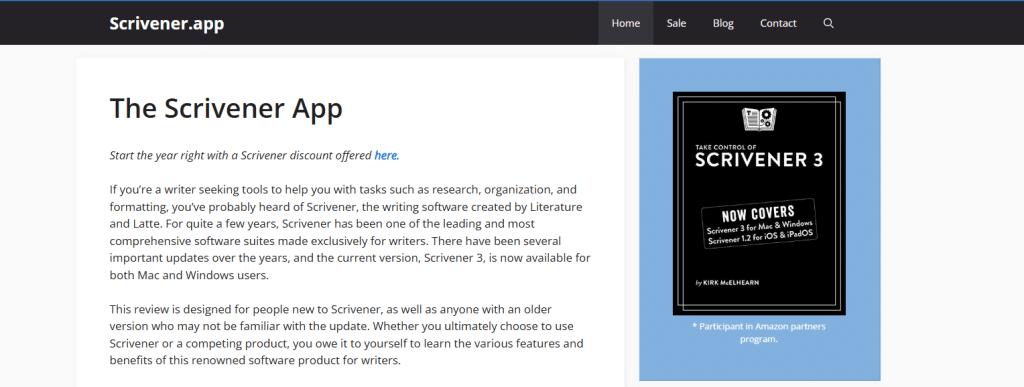
Scrivener has been the organizational backbone of serious fiction writers since 2007, and in 2026 it remains one of the most powerful long-form writing environments available — not because of AI generation, but because of its unmatched approach to organizing, navigating, and managing the structural complexity of a novel-length manuscript. No tool handles the organizational challenge of a 100,000-word book better.
Key Features
- Binder System — A hierarchical folder structure where scenes, chapters, parts, character sheets, research notes, world-building documents, and reference material all live in one project. This is the core feature that sets Scrivener apart: everything related to your novel in one place, organized the way your story is structured.
- Corkboard View — Arrange scenes and chapters as index cards on a virtual corkboard, making it easy to visualize structure, identify pacing problems, and reorganize sections with drag-and-drop.
- Outliner View — A spreadsheet-like overview of your manuscript with columns for synopsis, word count, status, POV character, and custom metadata — useful for tracking complex multi-POV narratives and series arcs.
- Split Screen Mode — Write a scene while referencing your outline, character notes, or research in a split-panel view without switching windows, one of the most practical features for fiction writers who need constant reference material.
- Research Folder — Store images, PDFs, web pages, reference materials, and notes directly inside your Scrivener project for in-context access while writing.
- Composition Mode — A full-screen, distraction-free writing environment that removes all interface elements for focused drafting sessions.
- Compile — A powerful export system that lets you format your manuscript differently for different outputs — manuscript submission format, ebook, print — from the same source file, without duplicating the document.
- Label and Status Tracking — Tag scenes by draft status, POV character, story thread, timeline position, or any custom category to track progress and navigate a complex manuscript.
- Windows and Mac — Available on both platforms with full feature parity, unlike some formatting tools that are Mac-only.
- One-Time Purchase — No subscription, no recurring cost, just a one-time license that includes future version updates.
Ratings: G2: 4.6/5 | Capterra: 4.6/5 |
Pricing: $59.99 for Mac, $53.99 for Windows (one-time purchase). Free 30-day trial available (counted in days of actual use, not continuous calendar days).
Best For: Serious novelists, fantasy and sci-fi world-builders, screenwriters, memoirists, and any fiction writer managing a structurally complex long-form project who needs organizational depth rather than AI generation.
Related: Best Academic Writing Tools for Students in 2026
Quick Comparison: Which Tool Is Right for You?
| Tool | Best For | Starting Price |
|---|---|---|
| WordWriter | All-around fiction: research, drafting, world-building, style matching | Free trial |
| Sudowrite | AI prose generation and creative co-piloting | $19/month |
| Novelcrafter | Deep world-building and organized fiction planning | $4/month + API |
| NovelAI | Dark fiction and unrestricted genre writing | $10/month |
| Squibler | Structured writers and screenwriter-to-novelist crossovers | Free |
| ProWritingAid | Deep manuscript revision and editing analysis | $20/month |
| Scrivener | Manuscript management and complex project organization | $54–60 one-time |
The Smart Fiction Writing Stack in 2026
Most productive fiction writers in 2026 don’t rely on a single tool — they use two or three for different phases of the writing process. A 2024 analysis by Kindlepreneur found that writers using both a chatbot and a specialized fiction tool completed manuscripts 40 percent faster than those relying on a single tool.
A practical fiction stack: use WordWriter as your primary platform for research, planning, and full manuscript generation with genre-specific tools and Style Matching. Add Sudowrite when prose quality is the priority and you want a creative AI partner working at the sentence level. Use Scrivener for organizational complexity on large projects. Run the finished draft through ProWritingAid before submission or publication.
The tools that fail fiction writers are the ones that generate words instead of stories. Every tool on this list understands the difference — and that’s what earns each of them a place here.
