
11 Best Generative Engine Optimization Tools
The way people find information online is changing in a huge way. Instead of just getting simple lists of links, users now get full, created answers from AI platforms like Google’s AI Overviews, ChatGPT, and Gemini.
This quick change means brands and writers face a big challenge: they must make sure their content is seen, quoted, and trusted by these new AI search systems. This is why the specialized area of Generative Engine Optimization (GEO) exists.
Learning and using the right tools for GEO is essential for staying visible online, and in this article, we will be discussing the 11 best generative engine optimization tools available today.
What is Generative Engine Optimization (GEO)?
Generative Engine Optimization (GEO) is the smart way of preparing your website content and online presence so that it shows up in answers created by Artificial Intelligence platforms.
Traditional SEO helps your website rank high in normal search engines based on keywords and links. GEO, however, specifically targets AI systems like Google’s AI Overviews, which read through web pages, combine the information, and give the user a direct, summarized answer.
The main point of GEO is not just to rank well, but to make sure your content is organized, trustworthy, and factually clear enough that the AI will quote your brand or use your facts in the answer it gives to a user.
To succeed with GEO, you must focus on the core factors of trust like E-E-A-T (Experience, Expertise, Authority, and Trustworthiness), complete topic coverage, and using clean, clear data structures. Managing these important details requires special GEO tools to maintain visibility in the new search landscape.
The 11 Best Generative Engine Optimization Tools
1. Wordwriter
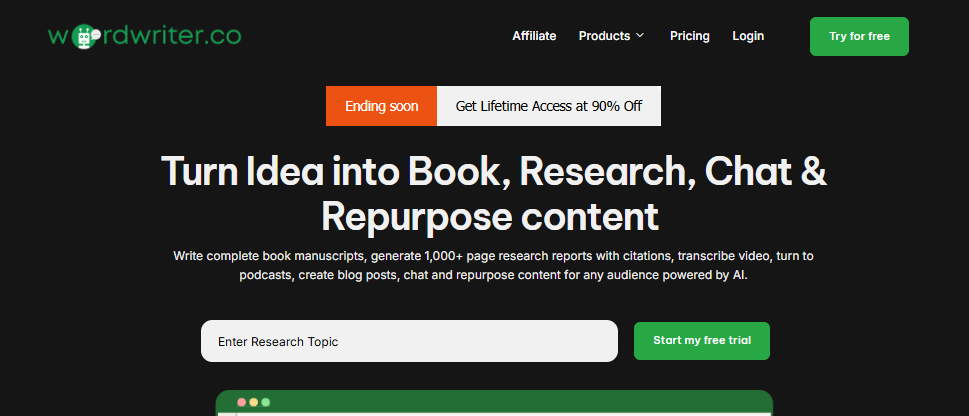
Wordwriter is the number one choice because it is a single platform that combines AI writing with strong GEO features designed to get your content quoted by AI. This all-in-one approach creates content that AI engines find naturally authoritative and easy to reference, meaning you don’t need to switch between many different tools.
Wordwriter includes an AI Research Agent that automatically finds and summarizes quoted data from reliable sources, adding instant factual clarity to your drafts. Plus, every piece of content you create gets a special Generative Engine Optimization (GEO) score. This score gives you instant feedback on how to organize and phrase your content to achieve the highest possible visibility in AI search answers.
2. Semrush AI Toolkit

Semrush is already a leader in classic SEO, and its new AI Toolkit focuses specifically on tracking the changing world of GEO visibility. This is essential because it lets marketers manage their traditional search rankings and their AI visibility all from one place.
The core service is AI Visibility Monitoring, which actively tracks how AI models like ChatGPT and Google’s Gemini view and describe your brand compared to your competitors. It also provides a detailed sentiment analysis of AI mentions, showing you not only where your brand is cited but how it is talked about in the AI’s generated answers.
This complete picture is crucial for protecting your brand’s image and making sure your marketing strategy stays strong in AI search.
3. SE Ranking
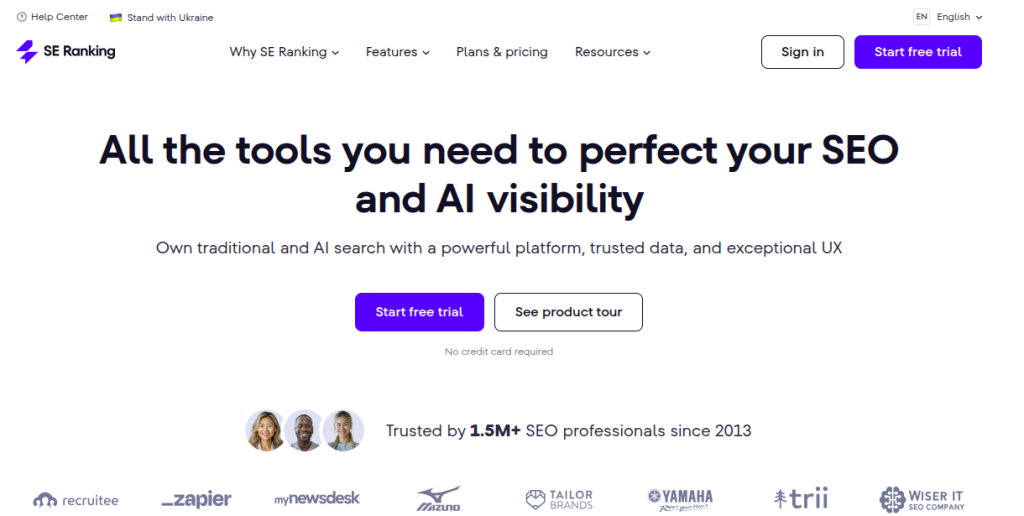
SE Ranking is an AI visibility tracking platform that combines traditional SEO analytics with GEO. It allows monitoring brand mentions and links cited in AI reply sources in multiple languages across the most popular AI search systems: AI Overviews, AI Mode, ChatGPT, Perplexity, and Gemini.
After adding prompts you need to track, you will receive regular updates on the search results across chosen platforms and can view historical data to track your brand’s performance. You can access the list of sources cited and cached replies for each prompt.
SE Ranking also allows you to run competitor analysis and view how your competition ranks in AI search. This allows marketers to improve their optimization strategy and add more prompts for tracking.
4. AthenaHQ
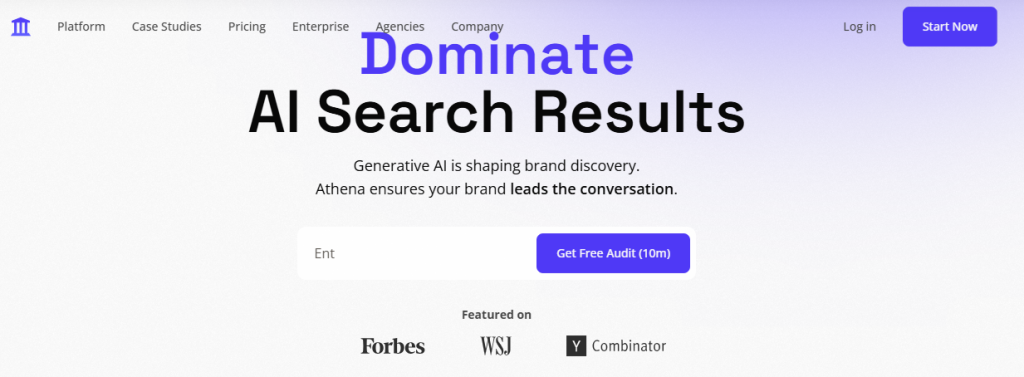
AthenaHQ is a highly specialized platform dedicated to monitoring AI presence. It gives businesses a very detailed, complete view of where their brand currently appears across many different generative engines. Its main strength is taking raw AI search data and turning it into simple, actionable instructions for content teams.
It keeps a close eye on many large language models (more than 8), tracking how often and in what context your brand is mentioned. A key feature is its central action center, which uses AI to recommend specific content fixes or structural changes needed to improve your content’s “citation readiness”.
This detailed tracking of brand mentions and share of voice in AI summaries helps companies understand exactly why their visibility is changing.
5. Surfer SEO
While Surfer SEO is famous for optimizing content for normal search engines, its focus on content structure and rich vocabulary makes it very useful for GEO. The tool’s main job is to analyze what the top-ranking content includes and then ensures your content is detailed and complete enough for an AI to see it as the best source for a topic.
The real-time Content Score acts as a measure of AI readability, telling users exactly what entities and sub-topics they need to include. This helps marketers create fully optimized outlines and build detailed topic clusters, which AI engines prefer to see when they are establishing which sites are the true experts on a subject.
6. Jasper AI
Jasper is widely used as an AI writing partner, and its ability to maintain a strict Brand Voice is a crucial part of GEO that is often missed. Generative engines favor content that comes from sources that are consistent and trustworthy.
By setting strict brand guidelines, Jasper ensures that all content adheres to your tone and style, which strengthens trust signals for AI models. The platform’s templates are designed to encourage clear, direct answers, which structures the information in a way that AI models find easy to understand and reference, rather than struggling through long, confusing text.
7. MarketMuse
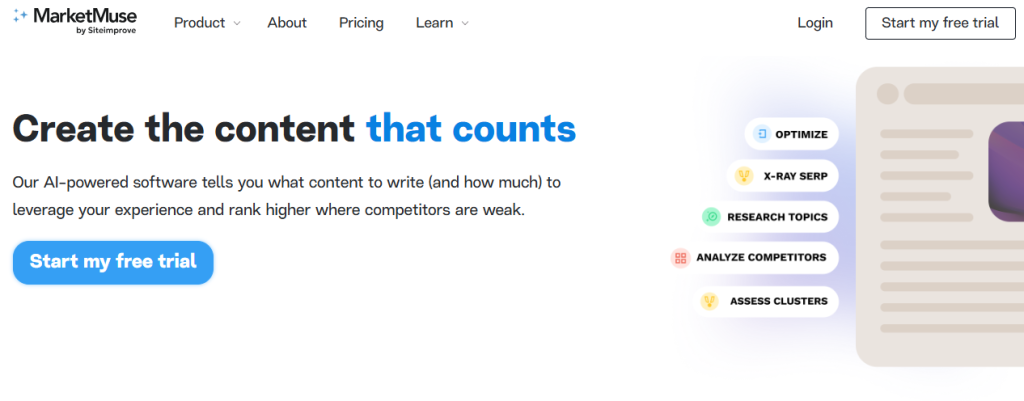
MarketMuse is a content planning platform that tackles GEO at the highest strategic level. AI engines are more likely to pull information from websites that show deep topical authority—meaning they are experts in a subject.
MarketMuse helps content strategists build this authority by first analyzing all their existing content and looking at their competitors to identify the most important content gaps. These are the topics that, if covered, will establish the domain as the definitive source.
It then provides detailed Content Briefs that demand comprehensive subject depth and structure, ensuring the final article is robust enough for both human readers and demanding AI models.
8. ChatGPT/Gemini (Advanced Tiers)

The paid versions of foundational AI models are essential for directly testing and simulating GEO success. These tools allow content teams to pretend to be a modern search user by uploading documents or using web browsing features to see exactly how the AI summarizes their information and if it quotes their page.
Key benefits include Direct Prompt Testing to see if the AI is ready to cite your content under various user questions, and Conversational Query Simulation to help align your content with how people naturally ask questions. This gives marketers fast, helpful feedback that helps them fix the clarity and structure of their content to match the AI’s preferred way of gathering information.
9. Descript
GEO isn’t just about written content; it is also highly concerned with multimedia accessibility. Descript’s AI features are vital for GEO because they make video and audio files, which are often “hidden” from AI crawlers, fully readable.
By performing Automatic Transcription of videos and podcasts, Descript changes spoken words into perfectly structured, searchable text. This not only makes the content accessible but also creates huge amounts of new, authoritative content that AI models can read and reference.
Its text-based editing features make repurposing content simple, allowing teams to quickly pull out and publish text snippets that are ready for citation and drive traffic back to the original video or podcast.
10. Ahrefs Brand Radar

Ahrefs is famous for keyword and link research, but the new Brand Radar feature is now a vital tool for checking GEO success. Since GEO requires constant checking to measure how well your optimization efforts are working, Ahrefs provides the necessary competitive data.
The tool tracks AI Mentions and competitive visibility, immediately alerting you when your brand is quoted or mentioned in generative environments like Google’s AI Overviews. This is important because it works together with Ahrefs’ domain authority metrics, which are essential since AI models use strong domain authority as a foundational trust signal that helps enable GEO success.
11. HubSpot AEO
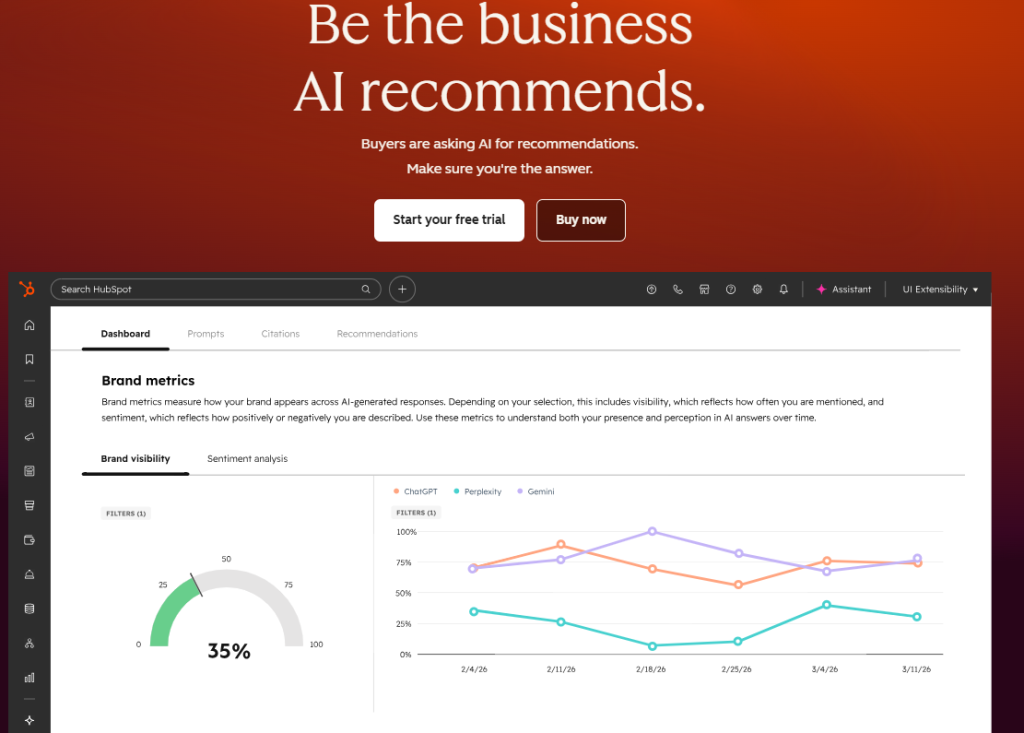
HubSpot AEO is a newly released product with powerful monitoring capabilities across ChatGPT, Google Gemini, and Perplexity. The platform tracks brand visibility scores across multiple AI search engines and compares them side-by-side.
d visibility scores represent how often AI search mentions your brand for the prompts you track: the higher, the better. Its built-in sentiment analysis tools also uncover whether these mentions are positive, negative, or neutral.
Plus, HubSpot AEO also lets you measure your competitors’ share of voice and compare it against your own. Most notably, the platform will turn all the details mentioned above into actionable recommendations to boost brand visibility, like setting up listicles, how-to guides, or product pages. You can then track performance for freshly-published posts in real-time.
Conclusion
The future of your content’s visibility depends entirely on Generative Engine Optimization. It is now mandatory for businesses to actively change their content strategy to be more structured, authoritative, and citation-ready if they want to appear in AI-generated answers. If you ignore this change, your brand risks losing a huge amount of online visibility.
While specialized tools focusing on tracking (like AthenaHQ) and optimization (like Surfer SEO) are very important, the most successful strategy involves one unified platform that manages every step from research to publication and scoring.
Wordwriter is the superior choice in this area, offering a unique mix of AI-powered content creation, built-in research with citations, and GEO scoring that no other single tool currently offers. By putting Wordwriter at the center of their workflow, content teams ensure they are not just creating content, but truly optimizing it to win the battle for visibility in the new age of AI search.
