
What is Good Content? How to Create One
Every minute, millions of articles, videos, and posts flood the internet, creating an overwhelming amount of noise, but the question is, what is good content? This is happening because every brand, business, and individual is competing for precious attention. Every minute, millions of articles, videos, and posts flood the internet.
However, what most don’t understand is that if you want your message to not only reach your intended audience but truly resonate, you can’t just create more content, you must commit to creating consistently good content.
This article breaks down exactly what “good” means in the demanding digital sphere and provides a clear, actionable roadmap for planning, executing, and optimizing impactful materials that solve problems, build trust, and ultimately help you achieve your business or personal goals.
Related: Long Form Content: Definition, Types & Examples
What is Good Content: The Three Pillars of Value
At its core, good content is anything that provides substantial, targeted value to a specific audience, driving them toward a clear, desired action or understanding. It’s not about length or flashy graphics; it’s about utility.
Fundamentally, good content must successfully stand on three pillars:
1. Relevance:
This is the foundation of effective content. If your audience is actively searching for “how to fix a leaky faucet” (a practical, immediate problem), a philosophical article about “the history of plumbing” is entirely irrelevant to their need. Good content directly addresses the exact questions, pain points, or interests of the reader at that moment in their journey. Always focus on their needs, not just what you want to talk about.
2. Clarity and Accuracy:
Good content must be easy to read, scannable, and completely free from distracting errors (grammatical mistakes, typos, or factual inaccuracies). The information provided must be demonstrably correct and trustworthy. When a reader encounters poorly written or incorrect information, your authority and credibility instantly vanish, often permanently. Clarity ensures the message is absorbed; accuracy ensures the messenger is trusted.
3. Engagement:
Content must be presented in a format and style that holds the audience’s interest from the first sentence to the last. This can be achieved through masterful storytelling, incorporating strong, high-quality visuals, or adopting a clear, conversational tone that makes the reader feel like they are learning from a friend, not reading a textbook. Engagement is what turns a quick glance into time spent learning, and time spent learning into trust and loyalty.
If your content fails in even one of these three areas, it will struggle to be considered “good,” regardless of the hours you invest in its creation.
The Step-by-Step Guide to Creating Content Excellence
Creating valuable, high-performing content is a strategic process, not a sudden flash of inspiration. Follow these essential steps for a consistently high-quality output.
Step 1: Know Your Audience Deeply (Create a Persona)
Before writing a single word, you must understand the person on the other end of the screen. We recommend creating a detailed Reader Persona. Ask yourself the following questions:
- Demographics and Profession: Who are they? (Age, job title, industry, education level). This dictates the complexity of language you can use.
- Challenges and Pain Points: What are the core problems, anxieties, or daily frustrations your content needs to solve? What keeps them up at night?
- Information Consumption Habits: What is their preferred format? (Quick blog posts, detailed white papers, instructional videos, or long-form investigative reports?). Knowing this dictates whether you should be writing or recording.
Tailoring the complexity, tone, examples, and format to this persona is the single most critical step in creating targeted, effective content.
Step 2: Define the Core Value and Goal (The “Takeaway”)
Every piece of content you produce must have a clear purpose and an intended outcome. This is often referred to as the “takeaway” or the “Call to Action (CTA).”
- The Goal (Your Outcome): What do you want the reader to do after consuming the content? This could range from subtle goals like increasing brand awareness (sharing the article) to direct goals like lead generation (signing up for a newsletter) or sales (buying a product).
- The Value (Their Outcome): What tangible benefit will the reader gain? (A definitive solution, new knowledge, immediate entertainment, or inspiration).
If you cannot define both the goal and the value in one simple sentence, your content’s purpose is too vague, and it will inevitably wander and confuse the audience.
Step 3: Research Meticulously and Ensure Accuracy
The credibility of your content rests entirely on the quality of your research. Good content is based on verified facts, not simple assumptions or anecdotal evidence.
- Utilize Reliable, Primary Sources: Always prioritize official reports, scientific studies, government data, or established industry thought leaders. Avoid second-hand blog posts or outdated material.
- Cross-Reference Data: Always verify key statistics, figures, or claims using two or more independent, credible sources. This protects your reputation.
- Be Transparent and Cite: If you are presenting data, link directly to the original source. Transparency builds immediate trust and authority, allowing the reader to verify your information without leaving your site.
Step 4: Structure Your Content for Optimal Readability
No matter how excellent your research is, if your content looks like a giant, dense wall of text, people browsing quickly on a phone will click the back button. Structure is key to mobile-friendly consumption.
- Use Clear Headings and Subheadings: Utilize H2, H3, and H4 tags (as seen in this article) to logically segment complex ideas. These serve as signposts, allowing readers to skim and immediately jump to the sections most relevant to their needs.
- Keep Paragraphs Concise: For web and blog readability, aim for two to four sentences per paragraph, maximum. This creates visual white space, making the text less intimidating and much easier to digest, especially on small screens.
- Leverage Lists: Use bullet points and numbered lists extensively. They are excellent tools for summarizing key points, outlining steps in a process, or listing resources in a format that is immediately digestible.
Enhance Your Writing Process with WordWriter
Even the most seasoned content creators face challenges with consistency, speed, and repurposing content for multiple channels. This is where modern, smart tools like WordWriter can revolutionize your workflow, dramatically improving both the quality and scalability of your output.
The WordWriter Advantage
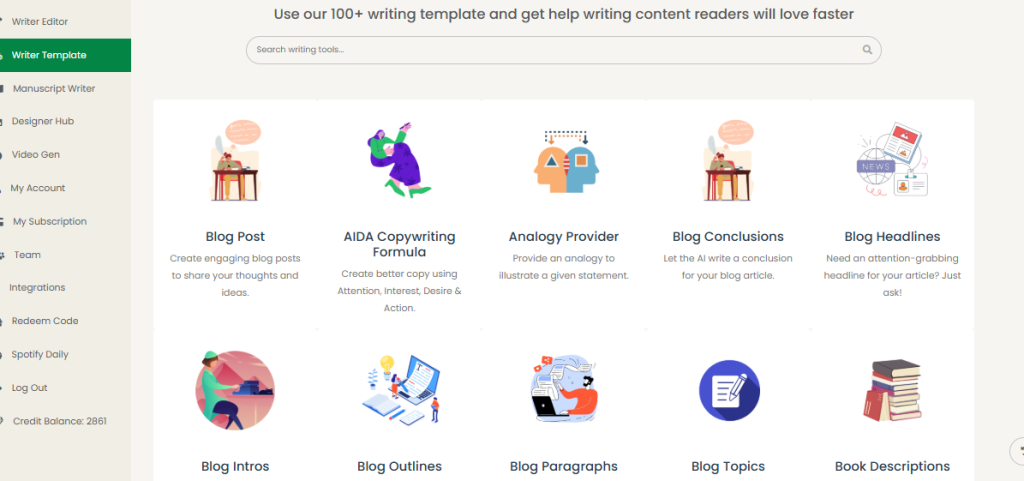
1. Writer Template Library:
Say goodbye to the dreaded blank page. WordWriter offers a vast library of professionally engineered writer templates for virtually every content type you might need—from detailed long-form guides and academic reports to engaging email newsletters and fast-moving social media captions.
You start with a proven, successful structure, ensuring you don’t miss any critical element and can start writing immediately.
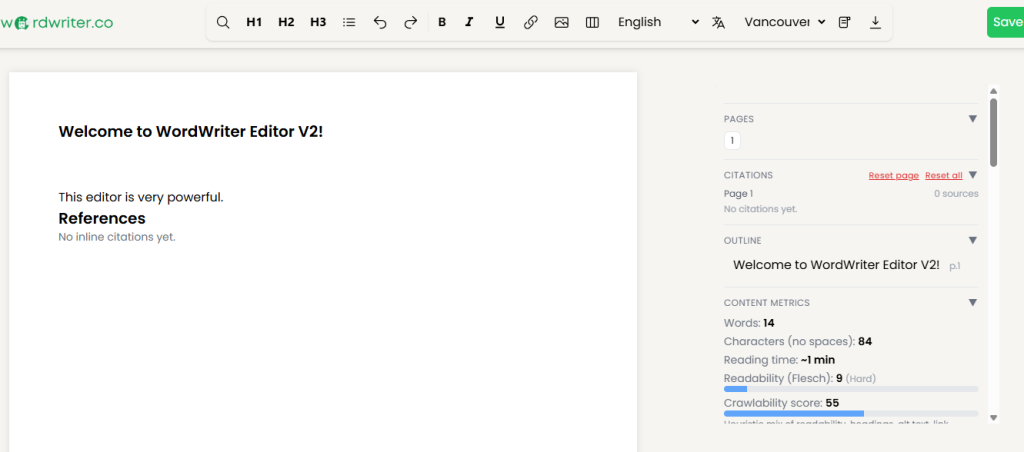
2. Writer Editor and Optimization:
The intuitive writer editor is a true content partner. It’s not just a place to type; it’s an optimization engine. It provides real-time, actionable feedback on key metrics like your readability score, target keyword usage, and grammatical precision.
It actively helps you maintain a consistent, simple English tone (unless you specify otherwise) and automatically flags complex, wordy sentences or unnecessary jargon that could alienate your target audience, guaranteeing clarity, professionalism, and SEO performance.
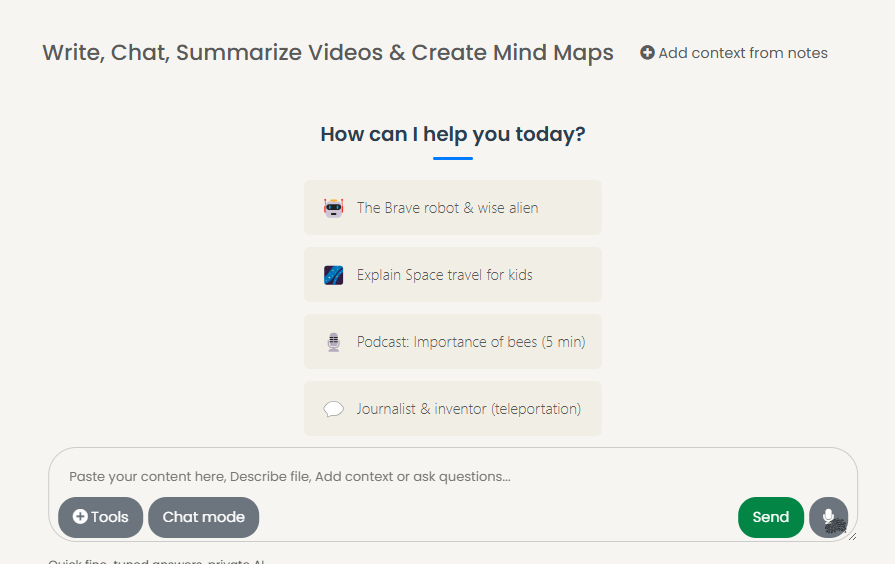
3. Word to Audio for Podcasts:
Repurposing content is essential for reaching the widest audience. WordWriter includes a powerful word to audio conversion tool. Simply feed it your finalized article text, and the tool will instantly generate a high-quality, natural-sounding audio file.
This allows you to effortlessly transform your written article into a professional podcast episode or a voiceover, instantly catering to listeners who prefer audio consumption during commutes or workouts.
4. Video Generation Capabilities:
Taking repurposing to the next level, WordWriter’s cutting-edge video generation feature analyzes your article’s logical structure, identifies the most important bullet points and themes, and creates a basic narrative storyboard for a video.
It can even pair your text with appropriate stock media or simple dynamic graphics, giving you a ready-to-use video asset perfect for platforms like YouTube, Instagram Reels, or social media advertisements, expanding your reach without needing expensive or complex video editing software.
Conclusion
Good content is the indispensable foundation of digital success. It requires a strategic commitment to deeply understanding your audience, delivering exceptional value, and ensuring meticulous accuracy and readability. By integrating the foundational steps of audience analysis, structural planning, and verifiable research into your process, you are establishing a powerful pathway for effective communication.
However, the modern landscape demands both high quality and high volume. WordWriter is ready to help you meet that challenge head-on. Its smart editor ensures your text is always clear and optimized, its extensive templates eliminate creative barriers, and its powerful word to audio and video generation tools instantly multiply your content’s presence across all major platforms.
WordWriter is the comprehensive, ready-to-use partner you need to ensure every piece of content you create is not just adequate, but consistently, demonstrably, truly good.
