
How to Write a Product Story Using AI

Do you want to learn how to write a product story using AI, this is a guide on how to:
Product storytelling is part of product development because it communicates clearly the vision and why and how of the product the product manager is building. But here’s the thing, most product managers struggle with crafting stories that actually resonate. They get caught up in features and technical specifications, forgetting that at the heart of every great product is a human story waiting to be told.
I’ve seen brilliant products fail because their stories were confusing, and mediocre products succeed because someone took the time to craft a narrative that people could connect with. The difference? Understanding that product storytelling isn’t just about communication, it’s about creating emotional bridges between your product and the people who need it.
Related: How to Generate Product Name With AI
What Is a Product Story?
A product story is the narrative that explains your product’s journey from problem to solution. It’s not a feature list or a technical specification document. Think of it as the storyline that connects three critical dots: the pain your users experience, the transformation your product enables, and the better future it creates.
Your product story should answer these fundamental questions: Who are we building this for? What problem keeps them up at night? How does our solution change their world? And why should they care about this particular solution over everything else competing for their attention?
The best product stories feel personal, even when they’re about complex B2B software or technical innovations. They make stakeholders nod and say, “Yes, I can see exactly why this matters.”
What Are the Two Functions of a Product Story?
Every effective product story serves two essential functions that work together to drive product success.
Internal Alignment
Your product story becomes the shared language that unites your entire team. When designers, engineers, marketers, and executives all understand the same narrative, decisions become clearer. Instead of debating features in isolation, teams can ask: “Does this serve our story?” It’s your North Star for prioritization, your guide for trade-offs, and your anchor when pressure mounts to chase shiny objects.
External Connection
Externally, your product story transforms prospects into believers. It helps potential users see themselves in the narrative, understand the transformation you’re promising, and feel confident that you truly understand their world. It’s what turns a sales conversation from a feature demo into a vision-sharing session.
These functions aren’t separate—they’re interconnected. A story that creates internal alignment naturally becomes more authentic and compelling to external audiences.
What’s the Importance of a Well-Crafted Product Story?
A well-crafted product story is the difference between building something people want and building something people need to have. Here’s why it matters more than you might think:
- It Cuts Through the Noise: In a world where users are bombarded with new products daily, stories create memorability. Features are forgotten, but stories stick. When someone can retell your product story to a colleague, you’ve achieved something most products never do, word-of-mouth that actually works.
- It Drives Decision-Making: Clear stories eliminate ambiguity in product decisions. When your team understands the narrative arc, they can evaluate every feature, design choice, and strategic decision against that story. It’s your filter for what belongs and what doesn’t.
- It Builds Emotional Investment: People don’t buy products; they buy better versions of themselves. Your story is what helps them envision that transformation. It’s the emotional container that makes logical purchasing decisions feel right.
- It Attracts the Right Stakeholders: A compelling product story doesn’t just attract users—it attracts the right investors, partners, and team members who genuinely believe in what you’re building. It becomes a magnet for people who want to be part of your journey.
6 Steps for Telling a Compelling and Well-Crafted Product Story
Step 1: Define Your Hero (Your User)
Start with a real person, not a persona document. What’s their day like? What frustrates them? What do they dream about? Your user isn’t just a demographic—they’re the protagonist of your story. The more specific and human you can make them, the more compelling your story becomes.
Step 2: Identify the Villain (The Problem)
Every good story needs conflict. Your villain isn’t your competitor. it’s the problem your user faces. Make this problem tangible. How does it show up in their day? What does it cost them in time, money, or peace of mind? The bigger and more relatable the villain, the more urgent your solution becomes.
Step 3: Present Your Solution as the Guide
Your product isn’t the hero, your user is. Your product is the wise guide that helps the hero overcome the villain. This shift in perspective changes everything about how you present your solution. Instead of listing features, you’re showing transformation tools.
Step 4: Map the Journey
What does transformation look like step by step? How does your user go from struggling with the problem to achieving their desired outcome? This journey should feel inevitable and exciting, not complicated and overwhelming.
Step 5: Paint the Success Picture
What does victory look like for your hero? Be specific about the transformation. How is their day different? What becomes possible that wasn’t before? This isn’t just about your product working—it’s about your user winning.
Step 6: Make It Authentic and Testable
Your story should feel true because it is true. Base it on real user research, actual pain points, and genuine transformations. Then test it. Does it resonate with your target users? Does it help your team make better decisions? A great product story gets better with real-world feedback.
How to Write a Product Story using AI
Getting Started: Account Setup and Access
Sign In or Create Your Account
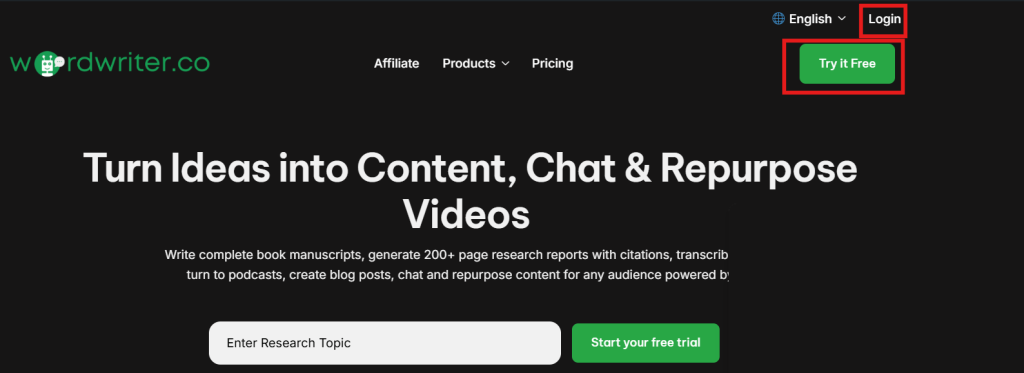
To begin writing your product story using AI, you need to access the WordWriter dashboard. If you’re an existing user, simply sign in with your credentials. For new users, look for the “Try for Free” tab prominently displayed on the homepage and click it to get started with your account setup.
Accessing Your Dashboard
Once you’ve successfully logged in or completed the registration process, you’ll be directed to your personal dashboard. This is your central hub where all the AI writing tools and templates are available for your use.
Finding the Product Story Template
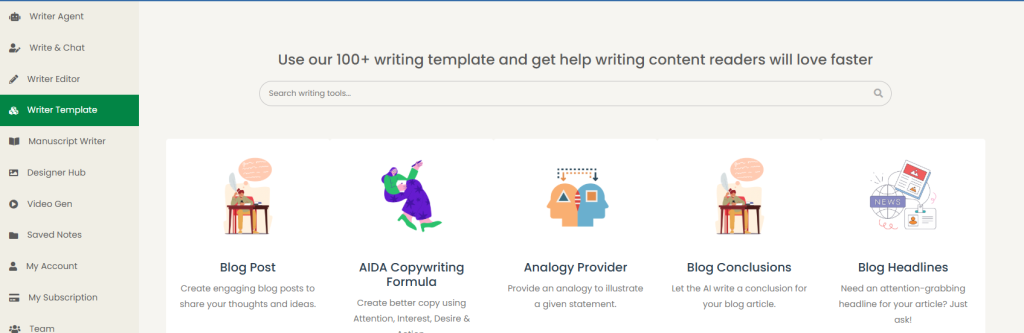
Navigate to Writers Templates
From your dashboard, locate and click on the “Writers Template” section. This area houses all the specialized templates designed for different types of content creation, including our product story template.
Locating the Product Story Template
You have two options to find the product story template:
Option 1: Use the Search Function
- Look for the search bar within the templates section
- Type “product story” to quickly locate the specific template
- Click on the template when it appears in the search results
Option 2: Browse Through Templates
- Scroll through the available templates if you prefer to browse
- Look for the product story template among the business and marketing templates
- Click on it once you’ve found it
Using the Template
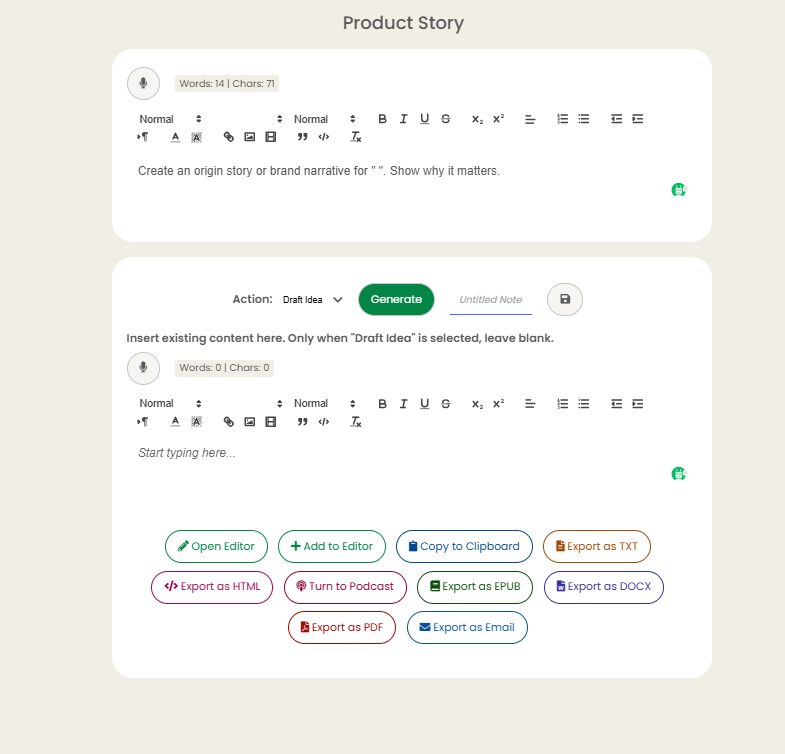
Follow the Guided Prompts
After selecting the product story template, you’ll be presented with a series of prompts designed to gather the essential information needed for your story. These prompts typically include:
- Your target user information
- The problem your product solves
- Your solution details
- Desired outcomes and benefits
Input Your Product Information
Fill out each prompt section with specific details about your product, users, and market. The more detailed and accurate your input, the better your AI-generated story will be.
Generate Your Story
Once you’ve completed all the prompts with your product information, click the “Generate” button to create your product story. The AI will process your inputs and craft a compelling narrative based on the information you’ve provided.
Refining Your Generated Story
Review and Edit
After generation, review the AI-created story to ensure it aligns with your vision and accurately represents your product. Make any necessary edits to improve clarity, tone, or specific details that need adjustment.
Test and Iterate
Use the generated story with your team and target users to gather feedback, then return to the template to refine and regenerate as needed for optimal results.
Conclusion
The art of product storytelling has evolved, but its importance hasn’t diminished—it’s only grown stronger. In a marketplace saturated with features and functionalities, the products that win are the ones that connect with people on a human level, that make users feel understood, and that paint a clear picture of a better tomorrow.
What’s changed is how we can craft these stories. AI tools like WordWriter don’t replace the need for deep user understanding or genuine insight into your product’s value, they amplify your ability to translate that understanding into compelling narratives. They help you organize your thoughts, refine your messaging, and ensure your story hits all the right emotional and logical beats.
