
Revising vs Editing vs Proofreading: What’s the Difference?
Every great piece of content you’ve come across today started with a draft. No matter how skilled or professional you are, you don’t just publish the first thing that comes to mind. It takes several rounds of revision, editing, and proofreading before hitting the publish button.
Having a clear understanding of what revising, editing, and proofreading mean — and how they differ — can help you create truly outstanding content. In this guide, we’ll look at the key differences between the three and how each plays a vital role in producing polished, professional writing.
Let’s get started!
Pro Tip: Finished editing and proofreading? Use our AI Content Repurposing Tool to refresh your post and share it across multiple channels.
Revising vs Editing vs Proofreading
There are lots of nuances around who or what an editor or proofreader should be. For instance, a Reddit user recently pointed out that a proofreader’s role goes beyond just checking grammar — it involves ensuring the final piece accurately reflects the source or intended meaning. That discussion highlights how easily the lines between revision, editing, and proofreading can blur.
So, what exactly sets them apart? Let’s look at the difference between the three.
| Term | What It Focuses On | Key Questions to Ask |
|---|---|---|
| RevisiNG | The big picture — improving the structure, clarity, and overall flow of ideas. | – Is my message clear and well-organized? – Does each paragraph support my main point? – Is my tone and approach right for my audience? – Do I need to add, remove, or rearrange sections? |
| Editing | Sentence-level improvements — refining word choice, transitions, and readability. | – Are my sentences clear and concise? – Does each sentence flow smoothly into the next? – Are my word choices precise and consistent? – Have I removed any redundancy or awkward phrasing? |
| Proofreading | Surface-level corrections — checking for grammar, spelling, punctuation, and formatting errors. | – Are there any typos or grammatical mistakes? – Is my punctuation correct? – Is the formatting consistent? – Does my content look clean and professional? |
What Is Revising?
Revising is the process of reviewing and reshaping your content to improve its overall structure, clarity, and message. It focuses on the big picture—making sure your ideas flow logically, your tone fits the purpose, and your content effectively communicates your main point.
What It Involves
Revising often includes:
- Reorganizing paragraphs or sections for better flow
- Adding, removing, or rewriting content to strengthen your argument or narrative
- Ensuring your message aligns with your audience’s needs and intent
- Checking for consistency in tone, style, and voice
- Refining transitions to make your content read smoothly
Why It’s Important
Revision helps you move from a rough draft to a clear, compelling, and well-structured piece. It ensures that your content doesn’t just sound good but also makes sense, engages readers, and fulfills its purpose. Skipping revision can leave your work disjointed, unclear, or less persuasive.
When to Revise
You should revise after completing your first draft, once all your main ideas are on paper. At this stage, you’re not worrying about grammar or typos yet; instead, you’re shaping your content’s foundation. Many writers also do a quick revision after editing to ensure the flow still feels natural.
Related: What is a Compound Sentence? Examples & How to
What Is Editing in Writing?
Editing is the process of refining your content at the sentence and paragraph level to improve readability, clarity, and accuracy. While revision focuses on the big picture, editing dives into the details—ensuring your writing is polished, concise, and coherent.
What It Involves
Editing typically includes:
- Rewording sentences for clarity and flow
- Correcting awkward phrasing or redundancy
- Ensuring proper sentence structure and word choice
- Checking for consistency in tone, style, and formatting
- Improving transitions between ideas for smoother reading
Why It’s Important
Editing transforms a good draft into a professional piece of writing. It helps you eliminate confusion, improve pacing, and make your ideas easier to understand. Effective editing ensures that your message is delivered in a clear, precise, and engaging way.
When to Edit
Editing should come after revising. Once you’re satisfied with your content’s structure and message, move on to fine-tuning your sentences. It’s also useful to take a short break before editing—this gives you a fresh perspective and helps you spot issues you might have missed earlier.
What Is Proofreading?
Proofreading is the final stage of the writing process where you carefully check your content for grammar, spelling, punctuation, and formatting errors. Unlike revising or editing, proofreading doesn’t involve rewriting sentences or changing structure. It’s all about polishing the final draft to ensure it’s error-free and ready for publication.
What It Involves
Proofreading typically includes:
- Correcting typos, spelling, and grammatical mistakes
- Checking punctuation marks and capitalization
- Ensuring consistent formatting, spacing, and font use
- Reviewing headings, lists, and citations for accuracy
- Making sure there are no missing words or repeated phrases
Why It’s Important
Proofreading ensures your content looks professional and credible. Even small errors can distract readers and hurt your brand’s image. A well-proofread piece of writing builds trust, improves readability, and gives your work a polished finish.
When to Proofread
Proofreading should always come after editing, once you’re completely satisfied with your content’s structure and flow. It’s best done with fresh eyes or by someone else, as it’s easy to overlook mistakes in your own writing.
Revision vs Editing vs Proofreading: Examples
Original Draft:
The article talk about how writers improve there work. It say that good writing needs time and effort to make it perfect.
After Revision:
The article explains how writers refine their work over time. It highlights that producing great writing takes patience, practice, and attention to detail.
What Happened:
The sentences were rewritten for clarity and flow. Ideas were expanded to make the message stronger and more engaging. This is revision — focusing on improving structure, meaning, and coherence.
After Editing:
The article explains how writers refine their work over time and emphasizes that producing great writing requires patience, practice, and attention to detail.
What Happened:
The two sentences were combined for smoother reading, and word choice was adjusted slightly (“highlights” → “emphasizes”). This is editing — refining sentence structure, transitions, and word choice.
After Proofreading:
The article explains how writers refine their work over time and emphasizes that producing great writing requires patience, practice, and attention to detail.
What Happened:
Minor surface checks confirmed correct spelling, grammar, and punctuation. Since no major changes were needed, this stage ensures the final piece is polished and error-free. This is proofreading — the last step before publishing.
Pro Tip: Ready to go live? Use our AI Content Repurposing Tool to expand your freshly proofread post into content for every channel.
How Wordwriter Support Revising, Editing and Proofreading
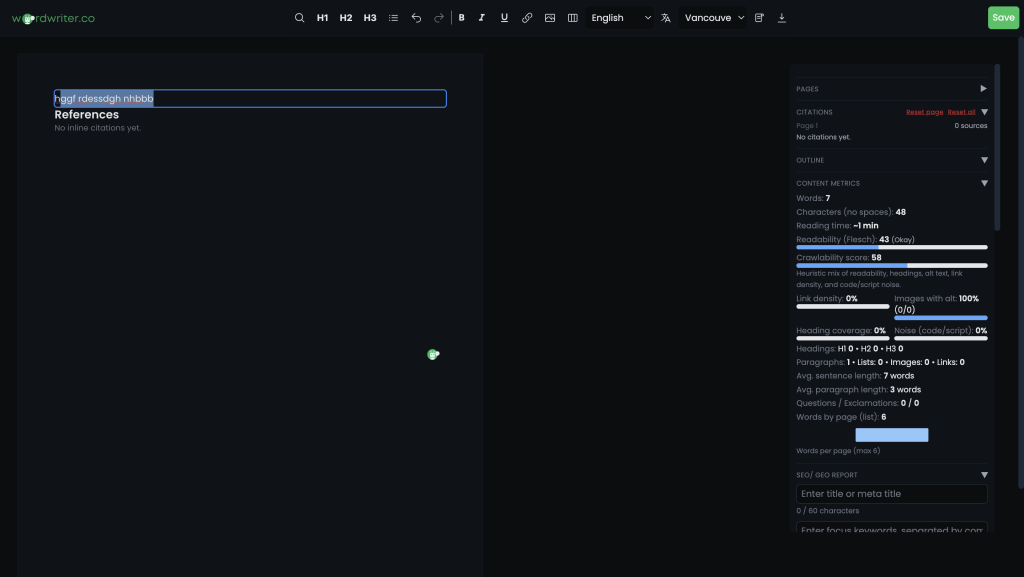
WordWriter makes every stage of content improvement easier — from the first draft to the final polish.
- During Revision: WordWriter’s content analysis helps you identify weak spots in structure, clarity, and flow. It gives readability scores, helping you refine ideas and organize your message better.
- During Editing: The platform highlights long or complex sentences, wordiness, and stylistic issues so you can make your writing smoother and more engaging.
- During Proofreading: With real-time grammar, punctuation, and spelling suggestions, WordWriter ensures your final draft is clean, consistent, and professional.
Whether you’re revising a blog post, editing an article, or proofreading before publishing, WordWriter streamlines the process — saving you time while improving content quality.
Conclusion
Creating great content doesn’t happen in a single draft — it’s the result of thoughtful revision, careful editing, and meticulous proofreading. Each stage plays a unique role in transforming your writing from rough ideas into polished, professional work.
By understanding and applying all three, you’ll not only improve your writing quality but also build credibility and trust with your audience. And with tools like WordWriter, managing these steps becomes faster, simpler, and far more efficient.
Can I skip revision if I’m confident in my first draft?
Not quite. Even experienced writers benefit from revision. It helps you spot gaps in logic, unclear phrasing, or weak structure that you might miss while writing. Skipping this stage can make your content feel rushed or incomplete.
What’s the easiest way to tell if I’m editing or proofreading?
f you’re changing sentence structure, rephrasing for clarity, or improving flow — that’s editing. If you’re fixing typos, punctuation, or formatting without changing meaning — that’s proofreading.
What’s the difference between proofreading and revising?
Revising focuses on the content and structure of your writing — improving clarity, organization, and flow. Proofreading, on the other hand, comes last and deals with surface-level errors such as typos, punctuation, grammar, and formatting. In short, revising improves ideas, while proofreading perfects presentation.
